
Understanding the Half Marathon Training With Strength Training
Running a half marathon is no small feat. At 13.1 miles long, endurance and a solid training plan are required to get you across that finish line.
Many runners focus solely on increasing their mileage. However, integrating strength training into your routine can enhance your performance, reduce the risk of injury, and improve your overall running efficiency.
Why Strength Training Matters
Strength training goes beyond just building muscle. It’s about developing the whole body. When you run, you’re not just using your legs; you rely on your core, hips, and upper body. A well-rounded strength training program prepares your body to handle the stresses of long-distance running.
Benefits of Combining Strength Training with Running
- Injury Prevention: Runners often suffer from injuries like shin splints, a runner’s knee, and plantar fasciitis. Strengthening the muscles, tendons, and ligaments that support the joints can help reduce these injuries.
- Improved Running Economy: Strength training can help improve your running economy, meaning you’ll use less energy at a given pace. This can lead to better performance in your races.
- Increased Power and Speed: Adding strength training to your regimen can produce faster running times. Stronger muscles can propel you forward more effectively.
- Enhanced Recovery: After intense runs, your muscles can take a beating. Strength training can help in recovery by balancing muscle groups and reducing tightness.
How to Integrate Strength Training into Your Half Marathon Training
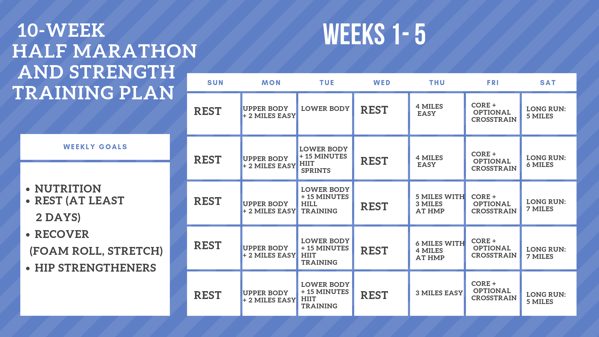
Integrating strength training doesn’t mean spending hours in the gym. A well-structured program focusing on specific muscle groups relevant to running can be very effective. Here’s how to do it.
1. Create a Balanced Schedule
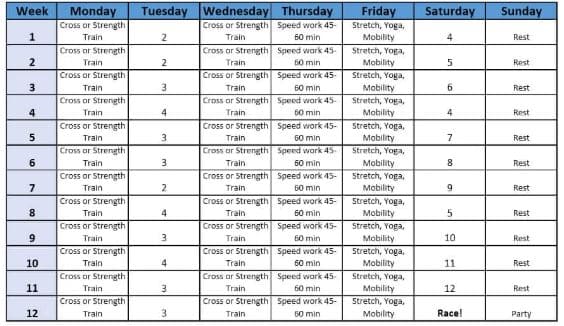
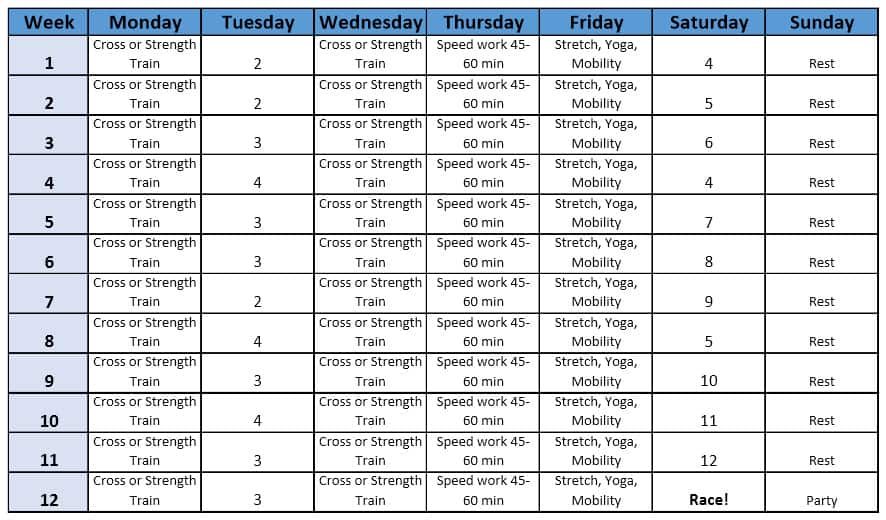
When blending strength training with your running, the key is balance. Here is a simple weekly schedule to guide you:
| Day | Activity |
|---|---|
| Monday | Strength Training |
| Tuesday | Short Run + Stretching |
| Wednesday | Strength Training |
| Thursday | Tempo Run |
| Friday | Rest or Light Activity |
| Saturday | Long Run |
| Sunday | Rest and Recovery |
This balance allows your body to recover adequately while making gains in both areas.
2. Focus on Functional Movements
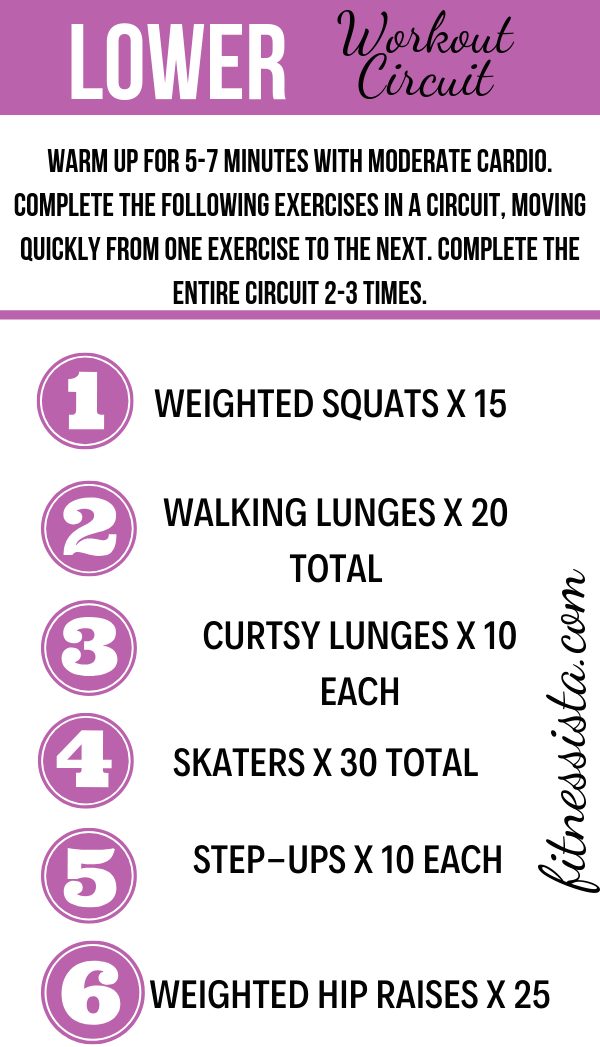
Many of the movements in your strength training should mimic the motions you perform while running. Here are a few practical exercises you can incorporate:
- Squats: These build overall leg strength and power. They stabilize your knees and keep you light on your feet.
- Lunges: Lunges work your quads, hamstrings, and glutes. They also improve balance and coordination, which benefits your running form.
- Planks: A strong core stabilizes your body when you run. Planks help build the necessary strength without straining your back.
- Deadlifts: This exercise strengthens the posterior chain, including hamstrings, glutes, and lower back. A strong posterior chain enhances your running stride.
- Push-ups: Strengthen your upper body and core, essential for maintaining posture during long runs.
Strength Training Guidelines for Runners
When incorporating strength training into your routine, it’s important to remember a few guidelines.
1. Start with Two Days a Week
If you’re new to strength training, beginning with two days per week focused on major muscle groups is an excellent way to ease into the routine without overwhelming your body.
2. Use Moderate Weights for More Repetitions
As a runner, your goal is to build endurance rather than bulk. Focus on light to moderate weights and perform 10-15 repetitions per set.
3. Don’t Forget to Stretch
Flexibility is crucial. Incorporating stretching exercises after your strength workouts will enhance recovery and improve flexibility, benefiting your running form.
Adjusting Strength Training as Race Day Approaches
As race day nears, you may want to adjust your training routine to focus more on running-specific workout sessions while still maintaining some strength work.
1. Tapering Before the Race
In the last three weeks leading up to your half marathon, keep your strength training sessions shorter and reduce the intensity. Focus on:
- Maintaining Muscle: Continue with lighter weights and high repetitions.
- Recovery Techniques: Use foam rolling and stretching to keep your muscles supple.
2. Last-Minute Strength Training Tips
If you find that you have some extra energy in the final few days, incorporate these suggestions:
- Light Full-Body Circuit: A short circuit (20-30 minutes) of strength training can keep your muscles engaged without wearing you out.
- Hydration and Nutrition: Ensure you’re eating well and staying hydrated. This goes hand in hand with any training routine.
What to Expect During Your Training Journey
Embracing strength training while preparing for your half marathon presents a unique journey. It might feel daunting initially, but the rewards are plentiful once you find the right balance.
1. Building Physical Resilience
You’ll notice yourself getting stronger physically and mentally. Those strength training sessions will push you to new limits, reinforcing your ability to tackle longer distances confidently.
2. Enhanced Mindfulness and Focus
Strength training often requires focus and precision. By concentrating on executing movements correctly, you’ll inevitably carry that mindfulness into your running.
3. Increased Motivation and Enjoyment
Variety can be the spice of life, even in your training. Mixing up your workouts keeps things fresh and helps you stay motivated as you work towards your half marathon goal.

Potential Challenges and How to Overcome Them
Integrating strength training into your running routine may come with challenges, but you can overcome them! Here are a few common concerns and how to deal with them:
1. Time Constraints
Many runners need help finding the time to fit running and strength training into their schedules. Please prioritize your workouts, even if it means shorter sessions. You don’t need hours; 30-minute sessions can be practical.
2. Fatigue
If you’re fatigued after strength training, schedule your runs at a different time of day or adjust your intensity to manage fatigue better. It’s essential to listen to your body.
3. Striking Balance
Running and strength training require a careful balance. If you’re feeling tired, focus on lower-intensity strength workouts. Conversely, if your legs feel heavy from running, consider scheduling a light strength day focusing on mobility or flexibility.
Staying Motivated Throughout Your Training
Staying motivated can sometimes feel like a challenge, but there are strategies you can employ to keep pushing forward:
1. Set Clear Goals
Please make sure your goals are specific. For example, instead of saying, “I want to get stronger,” aim for, “I want to increase my squat weight by 10 pounds in two months.” Clear goals help you measure your progress.
2. Keep a Training Journal
Documenting your workouts, including running mileage and strength workouts, and how you feel can help you see your improvement and keep you motivated.
3. Train with a Partner or Group
Sometimes all you need is a little company! Finding a training partner or joining a local running group can help maintain enthusiasm throughout your training journey.
:upscale()/2024/02/22/909/n/1922729/tmp_8LyjmY_24760af7e0d97db2_Color_PS24_02_F_H_HalfMarathonTrainingPlan_2550x3300.jpg "Half Marathon Training With Strength Training")
Recovery and Nutrition: The Unsung Heroes of Your Training
While strength training and running are crucial components of your journey, recovery and nutrition are equally important.
1. Listening to Your Body
Your body communicates with you. If you feel unusually fatigued or sore, step back and allow extra recovery time.
2. Importance of Nutritional Fuel
Your body needs proper fueling for both energy and muscle repair. Focus on a well-balanced diet, including:
- Carbohydrates: For energy.
- Protein: For muscle repair and recovery.
- Fruits and Vegetables: For essential vitamins and minerals that help your body function at its best.
3. Hydration is Key
Staying hydrated is crucial for both running and strength training. Adequate hydration helps improve performance and speeds up recovery.
Looking Ahead: Preparing for Race Day
As race day approaches, it’s time to put all your training to the test. Here are a few last-minute tips to ensure you’re fully prepared:
1. Final Week of Training
Stick to your taper plan and avoid any overly strenuous activities in the last week. Focus on lighter runs and maintaining your strength workouts at a low intensity.
2. Mental Preparation
Mental trickery is part of the game. Visualize yourself running the race, crossing the finish line, and celebrating your accomplishment. The mind is a powerful tool!
3. Assemble Your Gear
Have your race gear ready to avoid any last-minute stress on race day. Lay out your clothes, shoes, nutrition, and other essentials to ensure everything is prepared.
You’ve Got This!
Incorporating strength training into your half marathon preparation can be a game-changer. You’ll become a stronger runner with the right strategies and enjoy the journey more. As you stand at the starting line on race day, know that all your hard work — running and strength training alike — is what has prepared you for this moment. Enjoy every step toward that finish line!
Another Tips About Half Marathon Training With Strength Training
Training for a half marathon requires both endurance and strength. While most runners focus on building their mileage and improving their cardiorespiratory fitness incorporating strength training into your routine can help you become a stronger and more resilient runner.
In this blog post, we’ll discuss the benefits of strength training for half marathon training and provide tips on incorporating it into your training plan.
The Benefits of Strength Training for Half Marathon Training
Strength training offers a wide range of benefits for distance runners. Some of the key benefits include –
- Improved running economy – Strength training can help you become a more efficient runner by improving your muscle recruitment patterns and coordination.
- Reduced risk of injury – A strong and balanced musculoskeletal system can help prevent common running injuries such as IT band syndrome, shin splints, and plantar fasciitis.
- Increased power and speed – Strong muscles can generate more explosive power, which helps you maintain a faster pace during your races.
- Better posture and form—Strength training can improve core stability and overall body mechanics, leading to better running posture and form.
Tips for Incorporating Strength Training Into Your Half Marathon Training Plan
Now that we’ve established the benefits of strength training for half marathon training, let’s discuss how you can effectively incorporate it into your training plan –
- Make time for strength training—Schedule at least two to three strength training sessions per week, focusing on exercises that target major muscle groups used in running, such as the core, glutes, quads, hamstrings, and calves.
- Start with bodyweight exercises—If you’re new to strength training, start with squats, lunges, planks, and push-ups to build a strong foundation before progressing to heavier weights.
- Progress gradually – Gradually increase the intensity and volume of your strength training sessions over time to allow your muscles to adapt and prevent overtraining.
- Include variety – Incorporate strength training exercises into your routine to target different muscle groups and prevent boredom.
- Focus on quality over quantity – Prioritize proper form and technique during your strength training sessions to minimize the risk of injury and maximize the effectiveness of your workouts.
- Combine strength training with running—To avoid fatigue and overtraining, schedule your training sessions on non-running days or after easy runs to allow for adequate rest and recovery.
Sample Strength Training Exercises for Half Marathon Runners
Here are some sample strength training exercises that are beneficial for half-marathon runners –
- Squats – Target the quads, hamstrings, and glutes.
- Lunges – Target the quads, hamstrings and glutes.
- Deadlifts – Target the hamstrings, glutes, and lower back.
- Planks – Target the core muscles.
- Single leg calf raises – Target the calves.
- Russian twists – Target the obliques and core muscles.
- Push-ups – Target the chest, shoulders, and triceps.
Strength training is an essential component of half-marathon training. It can help you improve your running performance, reduce the risk of injury, and build a more resilient body.
You can become a stronger and more efficient runner by incorporating strength training into your training plan and focusing on exercises that target key muscle groups used in running.
Remember to start gradually, prioritize proper form, and combine strength training with running to achieve optimal results. Good luck with your half-marathon training journey!